My Ex Texted Me. Should I Reply?
Before you respond, pause. The reply can wait — your boundaries cannot.
Quick Answer
You do not have to reply immediately, and you do not have to reply at all. Read the message when you feel steady, ask whether responding serves your own boundaries, and remember that silence is a valid choice. If the message involves logistics like shared belongings or contracts, a short, factual reply may be appropriate — but emotional content can stay unanswered.
Learn more about the no contact rule
Why an Incoming Message Feels Urgent
When your ex reaches out, the message can feel like it needs an immediate answer. Old patterns, hope, guilt, or curiosity can all push you to reply right now.
A reply sent in urgency often reopens a loop you worked hard to close. You are allowed to pause, read the message on your own terms, and decide whether a reply serves your boundaries.
Questions to Ask Yourself Before Replying
Pause for a moment and notice what is driving your urge to respond:
- ?Am I replying because I want to, or because the message makes me feel I have to?
- ?Does this message ask for something only I can give, or is it seeking a reaction?
- ?Will a reply help me move forward, or does it reopen a loop I am trying to close?
- ?Am I hoping this message means something it might not mean?
What Kind of Message Is It?
The content of the message can help you choose a calmer next step:
Logistics-Only
Belongings, leases, shared bills, or co-parenting. A short, factual reply is usually fine.
Emotional Reach
I miss you, I was thinking about you, or checking in. Often safest to leave unanswered while you reflect.
Ambiguous or Vague
Hey, or a meme with no question. A reaction-seeking pattern. Silence is a clear answer.
Apology or Explanation
Can feel important, but reading it does not require a reply. Process it privately first.
Your Options
You have at least three paths, and all of them are valid:
Wait 24 Hours
Place your phone on Do Not Disturb. Re-read the message tomorrow when the urgency has passed.
Do Not Reply
Silence is a complete response. Not every message requires an answer, especially one that seeks a reaction.
Logistics-Only Reply
If the message is about practical matters, keep it brief, factual, and free of emotional content.
What Not to Do
- Do not reply while emotionally activated — write it in the Unsent Letter Vault instead.
- Do not double-text if silence follows your reply. Let the loop close.
- Do not assume the message means they want to get back together.
- Do not use the reply to punish, test, or test their interest.
Write the Reply You Will Not Send
If you feel pressure to reply, draft the words in the Unsent Letter Vault first. Let the urgency settle before deciding whether to send anything.
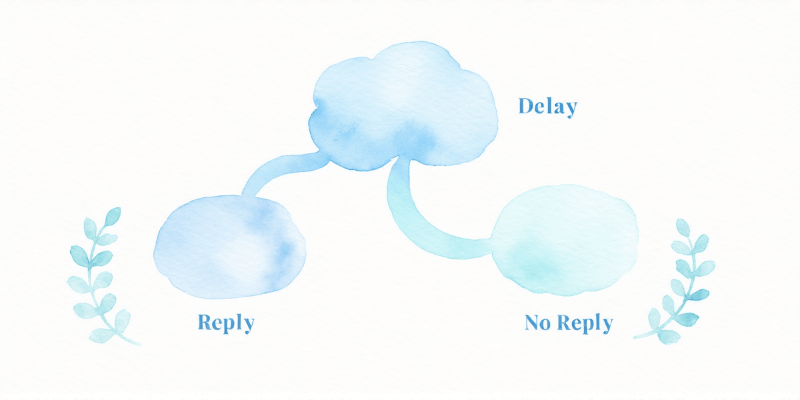
Four kinds of messages, four next steps
Sort the message by what it contains, then read across its row. These categories describe common possibilities in the text — not what your ex must be feeling or planning. The same words can come from very different places.
| Message type | Reply needed? | Low-pressure reply points | Stop condition |
|---|---|---|---|
| Practical must | Yes — brief, factual, once | Answer only the practical part: who, what, when, where. No feelings, no history, no opening question. Example — "Tuesday pickup works. I'll leave the boxes at the front desk by 5." | When the practical point is settled, the thread is settled. If the reply turns personal, do not continue the thread. |
| Polite greeting | Optional — silence is fine | If you reply, one warm and complete line with no question inside. If you would rather not, let it stand unanswered. Example — "Thanks — hope you're doing well." | One courteous exchange at most. Do not turn a greeting into a catch-up; when the polite part ends, stop. |
| Reconciliation topic | Not on demand — decide on your terms | You can wait a day before answering anything. Answer only what you actually mean, in your own timing — or answer nothing yet. Example — "I'm not going to talk about us over text. If I want that conversation, I'll say so." | Do not negotiate the relationship in bursts of messages. If the thread repeats the same loop, stop replying and write your answer privately first. |
| Sustained pressure | No | Repeated unwanted contact usually calls for a stronger boundary, not a better reply: mute, filter, or block — and keep records if it escalates. Example — No reply. If messages keep coming, restrict the contact instead of answering. | Stop engaging once a message only presses, guilts, or repeats. If you feel unsafe, contact local support services — a website is not that resource. |
One rule holds across every row: not replying is always a valid option, and no row requires you to guess anyone's intent.
Explore Related Breakup Boundary Guides & Tools
Our free materials help you navigate hard moments without reopening communication lines.
Should I Text My Ex?
Process the urge to reach out and start a calm pause countdown.
Broke No Contact
Step-by-step emotional reset if you sent an impulsive text.
Birthday Guide
Decision guide for navigating ex-birthdays safely.
Social Media Boundaries
Practical techniques to reduce social media checking impulses.
Closure Guide
Separate facts from hope and move on without reopening contact.
No Contact Rule
A guide to using no contact as a personal boundary, not a game.
No-Contact Decision Check
Decide whether structured no contact, limited contact, or safety first fits your situation.
Reset Checklist
Structured post-slip guide for your first 24 hours.
What Counts as Breaking No Contact?
20 clear examples, from texts and social media to accidental encounters, birthdays, shared friends, and necessary logistics.
Unsent Letter
Write out what you want to send and save it privately.
Drunk Texted Ex
Calm reset steps after sending a drunk text to your ex.
Ex's Stuff
A practical, logistics-only guide for handling your ex's belongings.
Can't Sleep
Why your brain won't switch off at 2 AM, and what actually helps.
Ex Has Someone New
How to deal with the jealousy when your ex moves on.
Ex Blocked Me
Being blocked hurts. Here is what it means and what to do.
Holidays After Breakup
Getting through the dates that used to be ours.
Shared Friends
How to keep mutual friends without making them pick sides.
Important Safety Disclaimer
PauseKits is a self-reflection and communication-boundary tool. It is not therapy, legal advice, medical advice, crisis support, or a relationship repair service. If you are in immediate danger, experiencing abuse, or feeling unsafe, please contact local emergency or professional crisis support immediately.