How to Stop Checking Your Ex on Social Media

You don't need to be fully over them to check less. Cut the access points, delay the urge, and shrink the loop one decision at a time.

You can check less before you feel fully over it

The next check gets easier to skip when it is harder to reach. Start with access, not willpower.

  • Remove the shortcuts that open their profile in one tap.
  • Clear the recent searches that autocomplete their name.
  • Mute or unfollow so their posts stop arriving on their own.
  • Log out of secondary accounts you use to look.
Learn more about the no contact rule
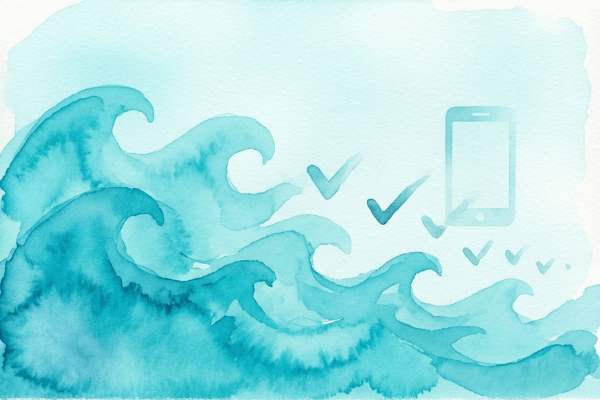
Watercolor illustration of a smartphone fading into transparency, showing profile-checking urges getting smaller over time
The urge gets smaller when the path gets longer

Why Checking Keeps Restarting

The loop is short: a trigger, a check, new information, an interpretation, and a stronger urge to check again. The check rarely answers the question it started with. It usually creates a new one, which is why one check leads to the next.

The checking loop

  1. 1.Trigger: a notification, a memory, a mutual friend's post, boredom.
  2. 2.Check: you open the profile or the story.
  3. 3.New information: a post, a location, an online status, a follower count.
  4. 4.Interpretation: you read meaning into it.
  5. 5.Urge to check again: the interpretation leaves a question open.

What Counts as Checking?

Checking is broader than opening a profile. If you are trying to reduce it, name the full list:

  • Viewing their profile or stories
  • Liking, reacting, or commenting
  • Watching follower counts and who they follow
  • Checking online status or last seen
  • Asking mutual friends for updates
  • Using a second account to look
  • Searching their name and reading the previews
  • Reopening old messages to see if anything changed
See what counts as contact in the no contact rule

Make Checking Harder

Each of these removes one path to their profile. You do not need all of them; pick the ones that fit.

Remove the shortcut

Delete the bookmark, the pinned chat, or the home-screen icon that opens their profile in one tap.

Clear recent searches

Their name autocompleting is an invitation. Clear it on every app you use.

Mute or unfollow

Muting stops their posts from arriving; unfollowing removes the feed entry. Both are reversible.

Log out of secondary accounts

If you keep an alternate account for looking, log out and remove the saved password.

Move the apps

Put social apps in a folder off the home screen or behind a longer unlock.

Turn off selected notifications

Disable story and activity alerts for that account so the trigger does not arrive on its own.

Stop asking mutual friends

Asking for updates is checking with extra steps. Tell one friend you are not taking updates for a while.

What to Do When the Urge Hits

A short sequence that works better than arguing yourself out of it:

  1. 1.Notice the trigger. Name it: a notification, a memory, a time of day.
  2. 2.Do not open the profile yet. The check can wait; it does not expire.
  3. 3.Move the action elsewhere. Open a note, the Unsent Letter page, or a conversation with a friend.
  4. 4.Delay. Set a timer for 10 minutes and do something that uses your hands.
  5. 5.Return later. If the urge is still there, it is a decision, not an emergency.
Should I Text My Ex?

If You Already Checked

One check does not undo anything. The pattern that matters is the second check, the third, and the spiral of interpretation after each one.

  1. 1.Stop at one. Do not go back to look again.
  2. 2.Name the access point you used: the shortcut, the search, the second account.
  3. 3.Remove that access point now, while the reason is fresh.
  4. 4.Continue from the next decision. No reset counter, no day zero.
Reset calmly after breaking no contact

Do You Need to Block Them?

Mute, unfollow, restrict, and block are different levels of the same move: fewer paths to their profile. The right level depends on how often you check and how hard it is to stop.

Mute

Stops their posts and stories from reaching you. They are not notified. A good first step.

Unfollow

Removes their content from your feed. They may be notified depending on the platform.

Restrict

Limits their ability to interact with you while keeping the connection. Useful when you share a circle.

Block

Removes your access to their profile and theirs to yours. The strongest option, and a reasonable one when checking keeps winning.

Platforms change their controls. The strategy matters more than the exact menu: choose the level that removes the path you actually use.

Mutual Friends

Asking mutual friends how they are doing, what they posted, or who they are seeing is the same loop with a messenger. You do not need to cut off shared friends. You do need to stop using them as a viewing window.

If a friend volunteers updates, you can say you are not taking them for now. That is a boundary, not a breakup with the friend.

A 24-Hour Reset

A short plan for the next 24 hours. One day, three moves.

Hours 0-1

Remove one access point: the shortcut, the search, or the second account.

Hours 1-12

When the urge hits, use the five-step sequence above. Write the interpretation down instead of checking it.

Hours 12-24

Notice how many checks you skipped. Pick the next access point to remove tomorrow.

Watercolor illustration of a protective bubble around a figure, with social media icons dissolving at the edge
Fewer paths in, fewer triggers arriving

Social Media Checking FAQ

Write the urge down instead of checking

PauseKits keeps an unsent letter and a pause tool on your device, with no account. Write the interpretation you are afraid of instead of opening the profile.

What this guide does not do

This is not a diagnosis and not therapy. It is about reducing a repeated behavior. If checking is tied to stalking, threats, or harassment, or if you feel unsafe, stop here and contact local support.

Important Safety Disclaimer

PauseKits is a self-reflection and communication-boundary tool. It is not therapy, legal advice, medical advice, crisis support, or a relationship repair service. If you are in immediate danger, experiencing abuse, or feeling unsafe, please contact local emergency or professional crisis support immediately.